Our story
Our story
The Amanzholov house
In 1951, Soviet cultural authorities commissioned two homes on a quiet Almaty street — purpose-built, architect-designed, offered as gifts to two men who had done something irreplaceable for Kazakhstan.
One was Mukhtar Auezov, the novelist who gave the world Abai — the defining work of Kazakh literature. The other was Sarsen Amanzholov: linguist, grammarian, and the man who helped give the Kazakh language a written form that would survive the Soviet era.
Amanzholov had spent the 1930s building the scaffolding of a language. He wrote the first grammar textbooks. He edited the first readers. And on November 10, 1940, at the 5th session of the Supreme Soviet of the Kazakh SSR, he was charged with creating the new Cyrillic alphabet — the letterforms that Kazakhs would read and write for the next eight decades.
"The street bore a different name until the city itself recognised what had happened here."
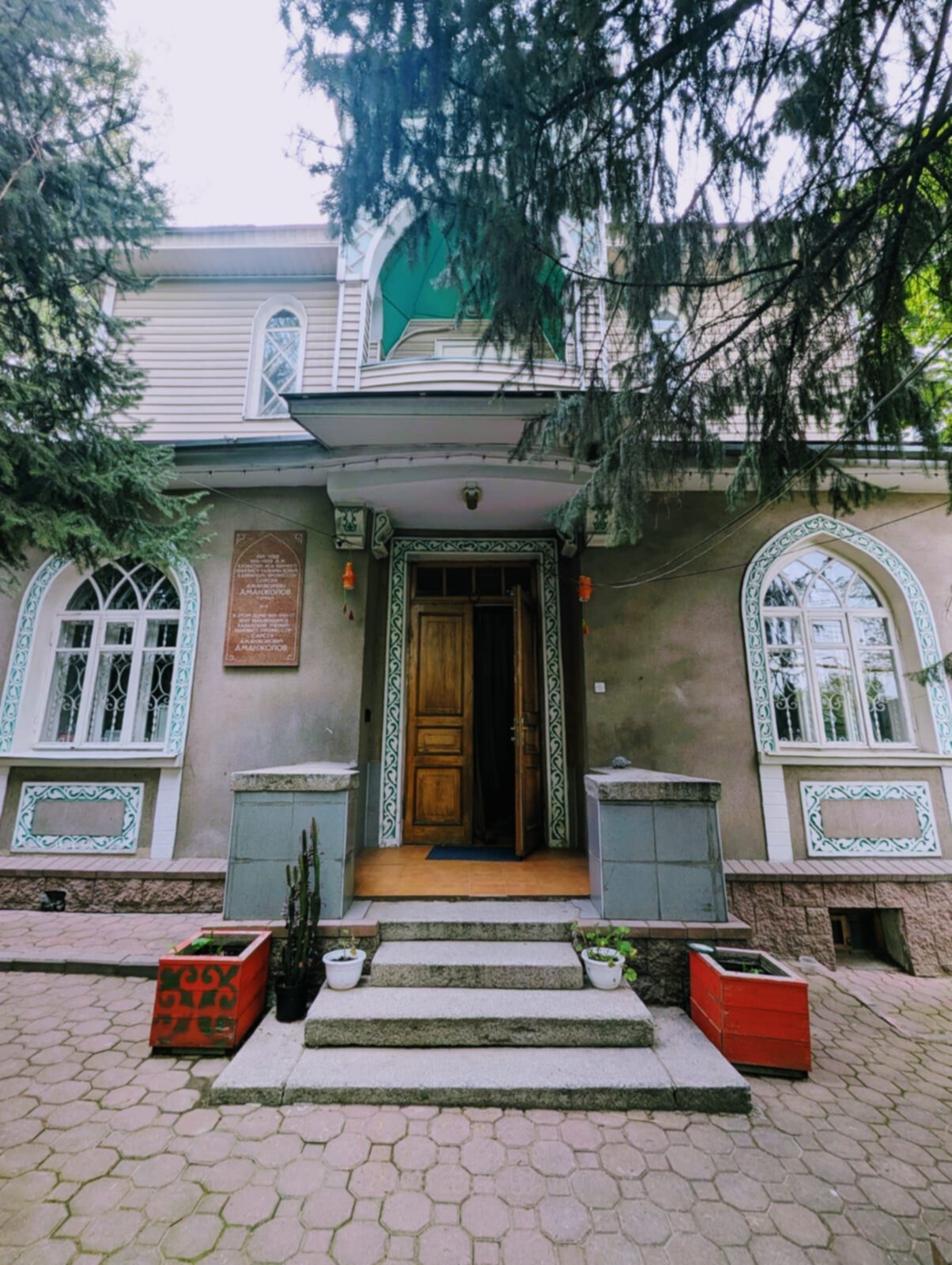
Vishnevaya Street, renamed Sarsen Amanzholov StreetAmanzholov lived in the house until his death in 1959. His family have never truly left. The original architectural detailing — the gothic arched windows with their teal Kazakh ornamental scrollwork, the veranda, the timber columns — remains intact, cared for, and meaningful. The Auezov house nearby, twin in its design and built in the same spirit, became a formal museum. This house chose a different path.
Sarsen Amanzholov's family had a clear vision for what they wanted: not a sale, not a renovation, not a demolition. They wanted the house to remain whole. They wanted it to be full of children's laughter and cultural events. They wanted it to be a magnet for the city — a living place where the memory of their grandfather and his work does not sit behind glass but continues to breathe, to inspire, and to gather people.
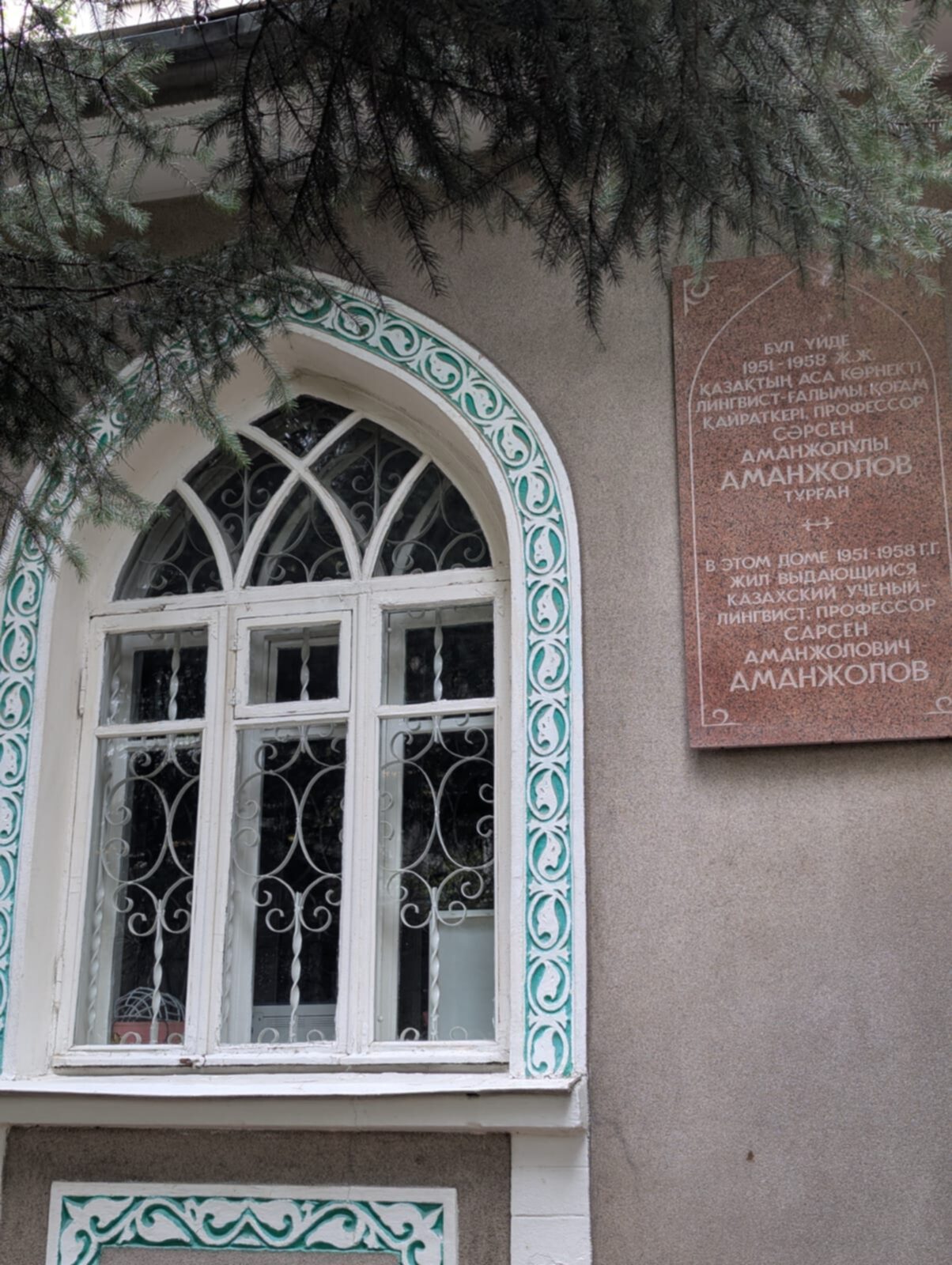
The original 1951 architectural detailing — teal Kazakh ornamental scrollwork around gothic arched windows — preserved unchanged.
Madina, Anton & shared guardianship
That vision brought Madina and Anton here. Having lived abroad and understood firsthand what it means to lose such places — and what it means when they survive — they returned to Almaty with the intention of creating exactly this kind of home. The Amanzholov family recognised in them the same commitment: to guard the memory together, to keep the house as it was, and to fill it with the kind of life Sarsen Amanzholov himself valued — language, culture, gathering, and the next generation.
"The family's wish is simple: that this house remains alive. That children run through the garden. That culture keeps happening here. We are honoured to share that guardianship with them."
Madina & Anton, ArnajaiThe yurt
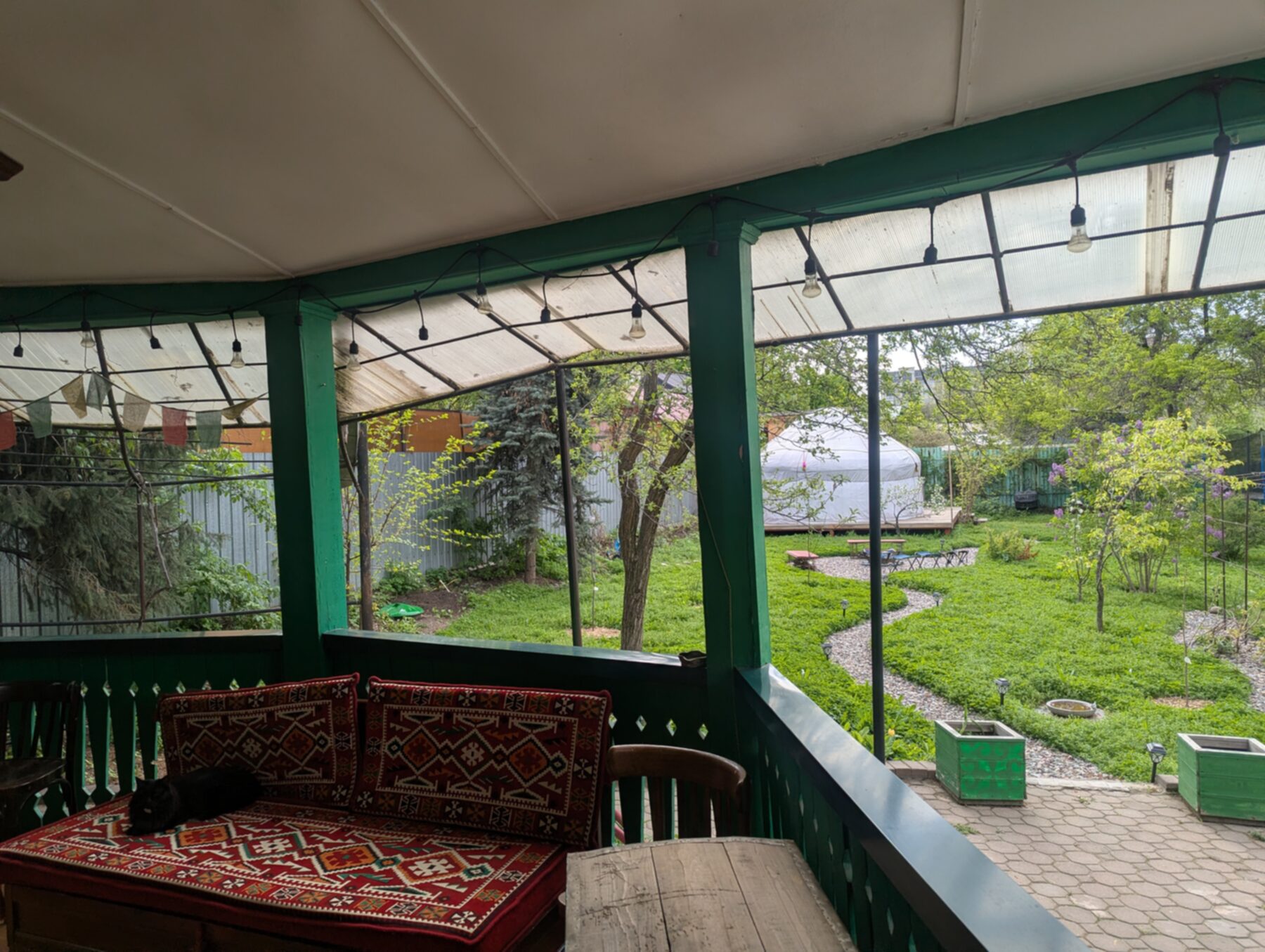
The yurt arrived in 2025. Acquired from the descendants of a shepherd who had worked the Karasay Gorge east of Almaty, it was restored with care and installed in the walled garden — a nomad's dwelling brought to rest beside the home of the man who gave nomadic culture its written form.
The Amanzholov family welcomed it as naturally as everything else that has found its way here. It belongs.
The house is best understood in person. Enquire about your event and we will show you around.
Get in touch